

Insurance companies don't just need more data. They need more usable data.
P&C insurers have never had more information at their fingertips. Policy transactions, claims histories, billing activity, underwriting decisions, and customer interactions generate enormous volumes of data every day. But that information often resides across a patchwork of legacy systems, disconnected applications, and separate data repositories. For many insurers, the challenge isn't simply accessing information. It's bringing that information together and turning it into timely, actionable business intelligence.
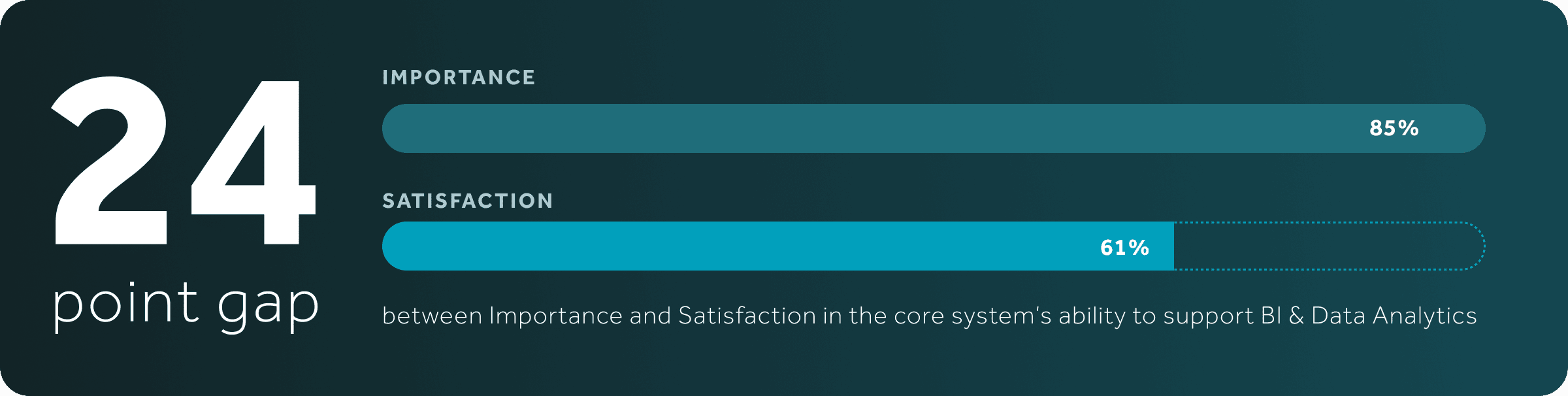
BriteCore's 2026 P&C Core Systems Report highlights this disconnect. While 85% of insurers identify business intelligence and data analytics as a leading technology priority, only 61% report satisfaction with their ability to obtain reporting and analytics from core system data. That 24-percentage-point gap between strategic priority and reported satisfaction highlights an important industry challenge: insurers recognize the value of their data, but their technology environments don't always make it easy to use. As artificial intelligence becomes more deeply embedded in insurance operations, closing that gap is becoming increasingly urgent.
Data Has Become a Strategic Business Priority
For insurers navigating competitive pressures, rising customer expectations, and increasingly complex risks, data analytics is no longer simply a reporting function. It's central to how organizations make decisions and improve performance.
Underwriting teams need visibility into portfolio profitability and emerging risk patterns. Claims leaders need to identify operational bottlenecks and opportunities to improve outcomes. Finance teams need timely insights into premium growth, loss trends, and business performance. The fact that 85% of insurers prioritize business intelligence and analytics underscores how broadly this need is recognized.
But prioritizing analytics and realizing its value are two very different things.
Core Systems Hold Valuable Data, but Not Always in One Place
Core insurance systems capture the transactions and activities that define an insurer's business. Policy admin systems contain information about insured risks, coverage, premiums, and renewals. Billing systems track financial transactions and payment behaviors, while claims systems capture loss events, settlements, and claims-handling activities.
For many insurers, however, these capabilities operate across separate legacy platforms, supplemented by specialized applications and external data sources. The result can be a fragmented environment in which valuable information is distributed across systems that weren't designed to work together. Extracting meaningful insights may require reconciling inconsistent data structures, integrating multiple sources, and navigating complex reporting processes. The challenge isn't whether the data exists. It's whether insurers can bring it together in a way that makes it useful.
Data Access Isn't the Same as Data Usability
Even when individual systems provide reporting capabilities, gaining a complete picture of the business may require combining information from multiple applications, reconciling inconsistent definitions, and manually assembling data.
An insurer might technically be able to extract information, but what happens next? Does the data require extensive manipulation before analysis? Can business users explore information independently, or must every question become an IT request? Are insights available when decisions need to be made?
Truly usable data must be accessible, timely, consistent, and available in formats that support different business needs. Ultimately, the goal isn't simply to produce more reports. It's to make data a practical resource for everyday decision-making.
Connected Systems Turn Fragmented Data Into Action
Modern, API-driven architectures offer insurers a more flexible approach to accessing and connecting information. Open APIs enable data to flow between core systems, analytics platforms, business applications, and external services, reducing dependence on manual extraction and complex integrations. But connectivity is only part of the equation. The underlying data architecture matters just as much.
BriteCore's approach illustrates the advantage of a unified core platform. By bringing insurance policy administration, billing, and claims together within one comprehensive system built on a common data schema, BriteCore provides a consistent foundation for reporting, analytics, and AI. Rather than reconciling information across separate core applications, insurers can work from a shared data model that supports greater consistency and accessibility.
Combined with open APIs, this architecture helps insurers turn operational information into actionable intelligence while maintaining the flexibility to connect with external systems and specialized technologies.
AI Raises the Stakes for Accessible, Governed Data
The growing adoption of AI makes data accessibility and consistency even more important. AI copilots and autonomous agents depend on reliable access to relevant business information. Their ability to answer questions, recommend actions, and execute workflows is constrained by the quality, accessibility, and governance of the underlying data.
When information is fragmented across disconnected systems, AI faces an additional challenge: obtaining a consistent, comprehensive view of the business. An AI assistant cannot reliably deliver meaningful underwriting insights if critical policy information is inaccessible or inconsistent. Likewise, agentic workflows cannot safely perform business actions without appropriate permissions, context, and oversight.
This is why AI readiness must begin with data readiness. As insurers move toward more autonomous, agentic workflows, a unified core data model can provide the consistent business context AI needs, while open APIs and governance controls enable agents to interact securely with the systems and processes that power insurance operations.
From Data-Rich to Insight-Driven
BriteCore's 2026 P&C Core Systems Report reveals an industry at an important inflection point. Insurers understand the value of business intelligence and recognize the potential of AI. But many still face obstacles in turning operational data into actionable insights.
Closing the gap requires more than additional dashboards or analytics tools. It demands a modern approach to insurance technology that reduces data silos, connects critical business information, and makes insights readily available across the organization. The insurers best positioned for the future won't necessarily be those collecting the most data. They'll be those that can use it most effectively.
Explore additional findings in BriteCore's 2026 P&C Core Systems Report to learn how insurers are prioritizing technology investments and preparing for an increasingly data-driven, AI-enabled future.